The revolt of the “Gyspy families camp” : épisode 1/9- a story of power for the present

Battle story

“The Revolt of the “Gypsy Families’ Camp”

Episode 1/9: “A Story of Power for the Present”

By Pierre Chopinaud

Par Pierre Chopinaud


The episodes of the series are taken from a lecture given by Pierre Chopinaud on May 16, 2025 in Berlin for the European Romani Institute for Art and Culture (Eriac).

“The choice between rebellion and submission—that’s what I’m going to talk to you about, by talking about the revolt of the prisoners in the Auschwitz-Birkenau Gypsy family camp on May 16, 1944.”

My name is Pierre Chopinaud. I am a writer. I write novels in French that recount the intimate dramas that stir the hearts of men and women, but also the great historical dramas that humanity has experienced since its beginnings. The stories I imagine are interwoven with the war in the former Yugoslavia, the Second World War, but also the wars between the Persians and the Greeks in antiquity. Above all, in the novels I write, I tell how these great dramas of human history enter the hearts of men and women and influence their destinies, the decisions they make, the choice to rebel or submit, to be indifferent or to commit themselves, for themselves or for others.

Ultimately, that’s what I’m going to talk to you about today, dear friends, by telling you a few words about the revolt of the prisoners in the Auschwitz-Birkenau Gypsy family camp on May 16, 1944, and the Romani resistance movement that I co-founded between 2010 and 2015 in France, in Paris, or more precisely, in the northern suburbs of Paris, in Saint-Denis, which is also the place where the presence of Romani people in France was first mentioned in 1427.

“Radical political organizing is an art that allows people in subordinate positions to build power in order to restore justice and reclaim their dignity.”

I speak to you today as a radical political organizer, because it is in this capacity that I co-founded the May 16th Movement. Radical political organizing is an art that allows people in subordinate positions to build power in order to restore justice and reclaim their dignity. The fundamental maxim of this political art is “there is no justice without power.” To this, I personally added, as the slogan of the Conatus organization that I founded to collectively practice this art: “the last are first.” This is a slogan I borrow from the Bible, the New Testament, from Jesus Christ if you will, but I take it more specifically from Reverend Martin Luther King Jr., a radical political organizer who was one of the leaders of the African American Civil Rights Movement. If radical political organizing is like a martial art, Martin Luther King, and his nonviolent revolution, is our Bruce Lee.

I’m telling you this because the Romani resistance movement, the May 16th Movement, the story of the uprising in the “Gypsy family camp of Auschwitz-Birkenau” on May 16, 1944, is a story of power. More precisely, it tells how to use history and stories as a leadership technique to build power and work toward justice—not only memorial justice, but justice for the present.

“The men, women, and children who arrived in the commune from neighboring Kosovo, where the war on land and the bombing campaign had just ended.”

At the age of 17, when I started to be a bit of an adventurer. It was precisely my last year of high school, and it was also the year of the Kosovo War, when European and American governments were bombing Serbia and Kosovo to end the conflict. I was perplexed by the excesses of state propaganda in my country that justified this bombing campaign. Since I wanted to become a writer and go into politics, I decided that my place was among the people there, trying to be useful amidst the catastrophe, and that I would learn more there than by listening to scholars talk at university.

There, I had my first deep and lasting encounter with Roma men and women. I was eighteen years old. I was in the commune of Suto Orizari, which I imagine most of you know. An extraordinary place in the suburbs of Skopje, the capital of North Macedonia, the only municipality in the world where the entire municipal council, including the mayor, belongs to the Romani community. Here, children and teenagers in schools and colleges learn Romani, the literary Romani language, written by artists who, for some, live on their street, in their neighborhood. It’s the language everyone speaks, in its various local dialects, in shops, hospitals, and markets. It’s also the language I learned there and still speak daily with my daughter, more than twenty years later. I was welcomed there into a small social organization whose employees were mostly Romani. This organization was responsible for identifying, registering, and assisting men, women, and children arriving in the municipality from neighboring Kosovo, where the war and bombing campaign had just ended, in accessing their rights.

The stories I heard, and that you surely have heard since childhood—the stories and grand pronouncements that underpin contemporary European civilization—can be summed up in a slogan, a moral: “Never again!”

I then listened to the accounts people were giving of the absurd and violent war that had driven them from the land to which they had belonged for centuries, in the heart of Europe. I felt, vaguely at first, that is to say, deep in my heart, that the principles and values ​​conveyed by the stories I had heard everywhere since childhood—at school, in books—the principles and values ​​that underpin Europe as a civilization, were entirely absent here: the dignity of every human being, which must be protected by the rights that belong to them, simply because they are a man, a woman, or a child; the dignity that institutions, states, international organizations, and the European Commission must guarantee in everyone.

“But here, somewhere in Europe, the children, women, and men of a national minority had been almost entirely driven from the land, from the country to which they belonged, by racist and nationalist hatred.”

All the stories, all the grand pronouncements, were a dead letter here, compared to the small accounts of people who told us of the distress they were in, and even more so the distress of those who had been unable to leave, and who had remained, caught in the crossfire of nationalist hatred. And above all, amidst the weapons, the fire that hadn’t quite died down in the city of Mitrovica, in northern Kosovo, where Roma men, women, and children were being protected by the UN in a camp built on land poisoned by lead. Even though they had survived the burning of their neighborhood, the murderous madness of nationalists on both sides was slowly killing them from below, so to speak, under the responsibility of the intergovernmental organization founded after the Second World War to protect children, men, and women when they are endangered by the state of which they are citizens. The UN contingent responsible for this catastrophe was French, and I felt in my heart that I was particularly affected by this disaster.

The stories I heard, and that you surely have heard since childhood—the stories and grand pronouncements that form the foundation of contemporary European civilization—can be summed up in a slogan, a moral: “Never again!” Never again should children, men, and women be placed in the state of distress and indignity into which they were subjected by racist and nationalist hatred during the Second World War. Yet here, somewhere in Europe, the children, women, and men of a national minority had been almost entirely driven from the land, from the country to which they belonged, by racist and nationalist hatred, and those who remained were left to die under the care of the United Nations, the very organization tasked with protecting them, in a state of organized collective weakness unparalleled in Europe since the Second World War.

(To be continued in the next episode…)
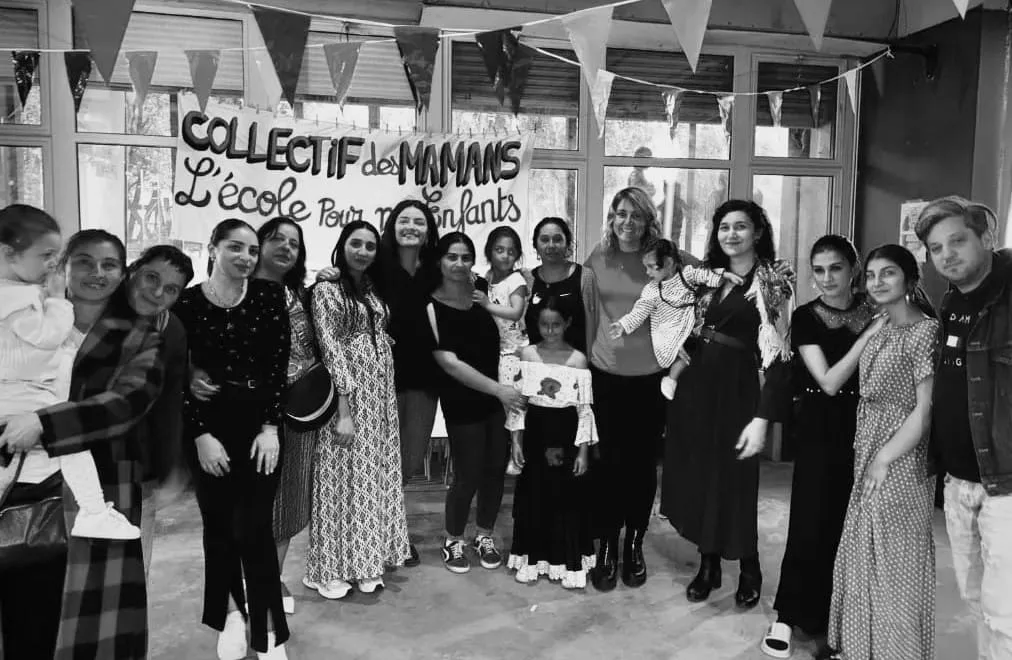
Story of the “moms’s collective” : episode 9/9 “the battlefield is the heart of the people”

Story of the “moms’s collective” : episode 9/9 “the battlefield is the heart of the people”

Battle story

The battlefield is the hearts of the people

EPISODE 9/9 : the battlefield is the hearts of the people

By Pierre Chopinaud


(Previously…)

But nothing could be done: no words could give her courage. Fear and resignation had taken over: her fear as a mother was the source of our downfall. She refused to act, and that was her most pressing right. From her point of view, she had nothing to lose except what she felt was already lost, just as it had been lost to her at birth: her child’s dignity.


“Sometimes, for a greater good, one must go through a lesser good: even a small evil. It is the eternal question of the relationship between ends and means.”

The battlefield is in people’s hearts. And history is impure. Sometimes, for a greater good, one must go through a lesser good: even a small evil. It’s the eternal question of the relationship between ends and means. And to understand this, to overcome the fear in Marina’s heart, the mothers’ collective had to this time instill an even greater fear. It was a moral dilemma. It’s wrong to force someone to do something they don’t want. But giving up the fight to be morally pure meant condemning all children like Marina’s daughter to never go to school. It meant losing everything the collective had gained over the past year, and even more, it meant losing the children here, but also in French Guiana, in Mayotte, all the children in France who live in shantytowns. Wasn’t that an even greater evil? What use would our clear conscience be in the face of the thousands of children who would fall back into the garbage bag of lives that don’t matter?

This problem is as old as the hills, as old as David and Goliath. And very often, activists respond to it with their heads, with their reason, like the German Enlightenment philosopher Immanuel Kant: “Act always and everywhere in such a way that the maxim of your action is universally true.” If I lie once, I make a law of lying. No just end justifies an unjust means. An evil means corrupts its end.

“in the field of action or around it, those who prefer to keep their conscience absolutely pure, at least according to the idea they have of it (because the rules of purity are relative to each person), are very often those who do not necessarily need the change sought by action”

But the strategists of his time responded to Immanuel Kant: “You, the philosopher, in your room, your hands are clean, but that’s because you don’t have any hands.” This means: you are a man who knows nothing about action. For the field of action is not one of pure rationality, and the moral law only applies to those who do nothing. They will always have a clear conscience.

This is why, in or around the field of action, those who prefer to keep their consciences absolutely pure, at least according to their own ideas of it (because the rules of purity are relative to each individual), are often those who do not necessarily need the change sought through action. They often need the purity of their conscience more than to get their hands dirty.

Now, the members of the mothers’ collective all necessarily needed the change they sought through action: because the dignity of their children was at stake; It was this keen awareness of the need for change that had driven them into action and enabled them to build power, climb the ladder, and win victories.

They hadn’t been able to convince Marina to continue the fight through hope; they wouldn’t lose the entire war, however; they would convince her by “terrorizing” her. It was the lawyer who took the responsibility of getting her hands dirty. Fear prevented her from acting; fear would force her. Lawyer Anina Ciuciu said that if she didn’t appear before the Council of State, she would bill her for the entire procedure from the beginning of the fight. She would owe her an immense debt, and she wouldn’t let her go. It was a bluff, of course. Marina had seen Anina ready to fight the Minister; she wasn’t ready to fight Anina: she was more ready to confront her husband.

W

Marina had been afraid of Anina, but now she was proud and happy: she and the others had won not only against the lady at the ticket office, not only against the mayor, not only against the rector, but against the Minister of Education, against the State.

On D-Day, she was ready, along with the other mothers, to enter the Council of State chamber. We had launched the offensive. The names of the mayor and Marina’s daughter were all over social media. There were already articles in the press. People all over France, by the thousands, were signing the petition. The mothers of the collective, dressed as if they were going to church, entered the grand gold and purple halls of the Palais Royal, where the highest court of the French Republic sits, to reclaim the value of their children’s lives.

To dodge sentencing, the minister personally called the mayor of the local school that very day to force her to enroll the little girl in school. It was a race against time: if she were enrolled before the judge ruled, the French Republic would avoid humiliation. Imagine the mayor’s face that morning in front of her phone? Imagine the face of the judge at the Montreuil court who ruled in favor of the mayor against Marina? Imagine the face of the rector who perhaps had, in one way or another, given her the order?

.

“They had killed the “big boss,” won the game. The game was over

As we left the Council of State, the mothers held up a large banner, their children ran and played between Buren’s famous black and white columns. The child had been registered, the Minister had not been sanctioned, but we had won! And we were already talking about it, the press was there: “a collective of mothers in precarious situations has won against the State,” wrote the Mediapart journalist the next day, who had been following our adventure since the first day. Maria’s mother had been afraid of Anina, but now she was proud and happy: she and the others had won not only against the woman at the counter, not only against the mayor, not only against the headmaster, but against the Minister of Education, against the State.

They had killed the “big boss,” won the game. The game was over.

The headmaster, even if he had nothing to do with the judge’s improbable decision, had made an irremediable mistake. Believing he was crushing us, he had given us a weapon to strike harder. Our rights were even more firmly entrenched in the law. The minister must have banged his fist on the table, and his blow must have resonated throughout all levels of the administration.

A few weeks later, we learned that the rector had been dismissed from his duties. Was it because of our campaign? We will never be certain. All that remains is for us to draw a final conclusion.

“We had not only affected the structure but we had profoundly transformed it.”

In the following days, Lucile’s phone started ringing again in her office at Askola. It was the usual bureaucrats. They were calling to make threats and announce that the administration was undergoing reform. The rector’s office would now intervene immediately when a mayor prevented a child from entering school. But in return, they had to lay down their weapons: no more press, no more courts. Indeed, since that day, the rectorate systematically intervenes when an illegal refusal is reported, and the mayor complies. We had not only affected the structure, but we had profoundly transformed it, at least locally.

But the threats were pressing: the bureaucrats had been forced to reform their practices, but it had clearly cost them money, and they were just waiting for one thing: to make them pay.

A few weeks later, the collective legal proceedings concluded. The one associated with the major campaign launch: “The Return of…” Faced with threats and intimidation from bureaucrats, including the intimidation of cutting public funding from Askola (which desperately needed it for its daily work as a school mediator), the team of leaders decided it was best not to make a splash.

On this occasion, we learned that the rector had been replaced: was it because of us? We don’t know. But we like to think so.

We have conquered an island, but it is the archipelago that must be tackled. The fight for justice is never satisfied. That is why for thousands of years the battle of David against Goliath has been fought and recounted…”

In the end, the wolf had not only been beaten, but had finally left the forest. And we won again: the mayors and the new rector were condemned once again. We didn’t shout it from the rooftops. The Askola Association had been financially jeopardized. And the big change, unexpectedly, we had achieved before this grand finale. Had we won? Not quite.

Because we know that if those in power, thanks to us, have changed their practices, they only do so when the rectorate’s services are contacted against a mayor by a parent who knows the procedure. What about the hundreds, thousands of parents who live in shantytowns, squats, on the streets, and who arrive alone at the counter? It was undoubtedly to allow themselves to continue to disregard the lives of their children that the bureaucrats, by giving in to the mothers’ collective, bothered to threaten the Askola team.

We have conquered an island, but it is the archipelago that must be conquered. The fight for justice is never sated. That’s why for thousands of years, the battle of David against Goliath has been waged and recounted…

To be continued…

Story of the “moms’s collective” : episode 8/9 “lose everything or win everything”

Story of the “moms’s collective” : episode 8/9 “lose everything or win everything”

Battle story

The battlefield is the hearts of the people

By Pierre Chopinaud


(Previously

It was not only the first defeat, but it might even be the end of the war! The mothers’ collective had been struck by surprise and knocked to the ground. Marina, in whose heart the other mothers had kindled faith, resented them: she had deluded her. And the others began to doubt their power. For if the judge had ruled in favor of the mayor this time, why wouldn’t he repeat this decision? It was undoubtedly the effect of the pressure coming from those in power. It was the obscure effect of the structure counterattacking. The mothers’ collective was stunned.


This certainty must be communicated by an organizer to the leaders he trains, who in turn must communicate it to the people they will engage in action. But this certainty is always simulated: because uncertainty in politics is the only truth.

Alisa, Mirela, Lucile, and Emmanuelle were on one knee. Not only had their opponent landed an unpredictable blow, but his blow was powerful. So, as organizer, my role was to urgently gather them together: like a trainer sitting next to a boxer in the corner of the ring after he’s been knocked out.

We had to understand what had happened, assess the damage, catch our breath, regain courage and hope, and adapt our strategy, decide what tactics the mothers’ group would use not only to get back up, but to fight again.

The group’s lawyer, Anina, was at their side. Perplexed, and also stunned. The judge’s decision, however you looked at it, was abnormal: why had he ruled in favor of the “wicked” mayor against Marina, the mother who was defending her child’s right to go to school?

The decision was contrary to morality, of course, to common sense, but above all, contrary to the law. I helped them analyze. Either the judge had decided under pressure from powerful people—was it our big bad wolf, the rector, who had appeared in the darkness of the woods to strike us down?—or he had made a serious legal error. We will never know for sure. No one ever sees clearly into the faces of power.

And uncertainty characterizes the context of all political action; it is the very nature of what happens on a battlefield to be uncertain. A strategist (every good leader is a strategist, and it is the organizer’s role to train them to be so) makes his plan perched atop his mountain, looking down at the battlefield, and before the battle has even begun. The least flawed plan reduces the element of chance and uncertainty in its unfolding: “If everything goes as planned, we will win.” Before engaging people in combat, one must be as close as possible to this certainty. Because this certainty, an organizer must communicate it to the leaders he trains, who in turn must communicate it to the people they will engage in action. But this certainty is always simulated: because uncertainty in politics is the only truth. However, as far as I’m concerned, I don’t engage people in an action if the plan developed doesn’t assure me that I have an 80% chance of winning. 20% is the place I give to chance.

“Strategic genius consists of dealing with the moment when chance arises: chance is the material of strategy, and there is something in it that is of the order of mystery or intuition.”

Because chance is chaos, chaos is the enemy of organization… But chance can also be opportunity.

No matter how close to perfection the plan or strategy may be, as soon as the members of the organization implement the thought-out tactics, as soon as they engage in actions on the battlefield, chance arises from all sides. However small the place it was given in the plan, the less important.

Strategic genius consists of dealing with the moment when chance arises: chance is the stuff of strategy, and there is something mysterious or intuitive about it.

This is why many great strategists throughout history attributed their decisions to omens or inspiration… But that’s another matter. This is how the act of strategic decision-making resembles the act of creation in art…

Be that as it may, Anina had an idea. And it was this idea that saved us.

Chance appeared on the battlefield in the guise of a constraint or an opportunity. She had the idea of transforming constraint, or misfortune, into luck, into opportunity.

The mothers’ collective was not only going to challenge the judge’s decision, but was also going to take the dispute to the highest court: the Council of State!

It’s a bit like if, in a game of chance, after losing 99% of their treasure, a player outbid their opponent by a disproportionate amount. It was a major bluff. We could lose everything or win everything.

W

The risk was great, it was commensurate with the stakes, and commensurate with the chance. We were entering into a dance between chance and certainty.”

The risk was great, commensurate with the stakes, and commensurate with chance. We were entering a dance between chance and certainty. The Council of State’s decision could, if it upheld the wicked in its decision, result in the new law, the new rule. We would then not only lose the battle for Marina’s child, but it would be the tragic end of our story: injustice would prevail, the wicked would win, and the lives of the children we were fighting for would be thrown among the garbage to which the powerful in the department doomed them.

Even more serious: we were taking the risk of destroying the decree won long ago by the #EcolePourTous collective, which was the lever on which we had relied throughout our campaign.

Suffice it to say that going to the Council of State was taking the risk of everything collapsing. Not only would we lose our war, but retroactively lose the wars of those who came before us.

But it was also our luck: we felt we were reaching the end of our story: by accident, everything was coming together. The drama was about to unfold. It was a final face-off that the mothers’ collective was about to engage in. They had everything to gain and everything to lose: no calculation could guarantee us victory. So, each of us in the small group of leaders, Anina was the first to overcome the doubt that was agonizing her, and Mirela and Alisa announced to the members of the collective how they would get back up.

And in truth, like good leaders, they initially concealed the fact that they had been knocked down. For courage and hope are the two substances that, in the hearts of those who fight, win the war.

“This whole campaign was a game from the beginning, but a game whose ending can have dramatic consequences on reality.”

We had to put all the strength of the mothers’ collective into this final act, and to mobilize our forces, we had to be courageous. This required a bit of drama. This entire campaign had been a game from the beginning, but a game whose end could have dramatic consequences for reality.

By emerging from the woodwork without showing himself, the rector had committed a fatal error. He had tried to trap us, but the mothers’ collective was about to turn his trap. Because the final act of this story, of our David versus Goliath, was now the story of the innocent little girl Maria, versus the Minister. We were going to hold the latter accountable and tell the story. They say that leadership is about convincing others to take action despite uncertainty. That’s why one of the greatest challenges of action for justice, the most decisive of battles, the site of the great battle, is in the hearts of the people. The act that makes the difference is the one that transforms fear into courage in the hearts of the offended.

But alas, nothing is pure in this world. Before setting out to fight this last battle, the greatest, the one we perceived to be the grand finale—from which the women of the collective would emerge victorious or even more humiliated—they had gathered all their best weapons. And among these weapons, one was formidable.

A few weeks earlier, as part of another campaign I was organizing related to the issues faced by unaccompanied minors, we had made Raphaël Glucksman an ally. And he possessed a weapon that would be useful in the final act of the mothers’ collective’s story: his Instagram account.

We were going to use it. But first, we had to interest him in the cause. After a well-organized and prepared meeting, it was done. He would be part of the fight.

The tactic (the action) was as follows: on the day of the hearing at the Council of State, the mothers’ collective would launch a petition that would be circulated on the MP’s Instagram account and led by his team. The unjust story of Marina and her child humiliated by the wicked mayor of a commune in Seine-Saint-Denis would reach an unscheduled hearing that very day. And since the case would be brought before the Council of State, it would not only be the mayor’s responsibility that would be engaged, but that of the French government in the person of the Minister of Education. In this case: Pap Ndiaye. He would be the target of the public accusation, of the shame. He would not only become the villain of the story but would also, in the event of victory, be the person found guilty, responsible for this infamy.

“No words could give her courage. Fear and resignation had taken over: her fear of motherhood was the source of our sinking. She refused to act, and that was her most pressing right”.

Everything was ready. But nothing was possible without Marina taking action. The target was clear, the weapon loaded, all that was missing was her decision. Nothing was possible if she didn’t file a complaint. The entire outcome of the war depended on her hesitation between fear and courage. The decisive site of the battlefield was the secret of her heart.

Now, discouraged by the unexpected defeat: once again, she said “No!” She had once given her trust because Alisa and Mirela had given her hope. But she had lost. She no longer believed in the power of the mothers’ collective. It was in her consent that the final word of the story lay. It was less in the judge’s decision than in her heart that victory would be decided.

But nothing could be done: no words could restore her courage. Fear and resignation had taken over: her fear as a mother was the site of our shipwreck. She refused to act, and that was her most pressing right. From her point of view, she had nothing to lose except what she considered already lost, as it had been lost to her at birth: the dignity of her child.

(More in the next episode….)

Story of the “moms’s collective” : episode 7/9 “he who dominates never has enough”

Story of the “moms’s collective” : episode 7/9 “he who dominates never has enough”

Battle story

The battlefield is the hearts of the people

By Pierre Chopinaud


(Previously

The pressure continued to mount, and Lucile’s phone in her office continued to ring. In the woods, the bad guys were stirring; the advice and threats from the bureaucrats of the public administration were becoming increasingly frequent. Until one winter day, a few months after the great back-to-school action: everything was on the verge of collapse. While the collective of mothers was at the height of its power, when each one’s heart was swollen with love, joy, and pride, when each one felt the great victory approaching, a reversal brought them to the brink of defeat…

“Marina was so weak and fragile, so helpless, that it would never have occurred to her that she had the right not to suffer this humiliation.”

So one winter morning, as still happened every week, a young mother, Marina, who lived in a slum, was denied school enrollment for her child by the mayor of her town of residence. Completely illegal, she, like many other parents, was humiliated.

Unfortunately, after a year of fighting, this was still routine for the leadership team of the mothers’ collective. Despite the many small victories achieved, many mayors of the 93rd arrondissement still preferred to be outside the law and expose themselves to the risk of a public shaming campaign rather than welcome children from squats and slums into their town’s schools.

Why? Because welcoming these children into schools, into the school community, as the law and the principles of the republic oblige them to do, means recognizing that they exist, that they have dignity and rights, like everyone else. On the contrary, refusing to allow a child into school makes him and his family invisible, throwing them into the trash heap of lives that don’t matter, of deaths that aren’t mourned. And so it makes things easier when the goal is to eliminate the slum where he lives.

But back to Marina, she was once again like the helpless little shepherd David. After so many others, she was experiencing the humiliation of being prevented by a powerful Goliath from sending her son to school.

She was so weak and fragile, so powerless, that it wouldn’t have occurred to her that she had the right not to endure this humiliation with her child.

It was the mothers of the group, strong in their courage and their victories, who came, as always, to surround her, explain to her what was happening to her, and above all, tell her that, thanks to their support, she had the power to defend herself and win. If she decided to take action, that is, to go to court, in two days her little David would be in school.

“Very often in the heart of an oppressed person, fear advises, in the face of violence and the arbitrariness of power, not to act, fearing that the slightest effort to reverse the relationship of inequality will only result in increasing the crushing weight.”

The feeling that dominates the heart of a person in a situation of great powerlessness is fear. She feels the weight of the one at the other end of the relationship who deprives her of her rights. This one, her first face, is the lady or gentleman at the counter. But the oppressed person, Marina, feels that behind this face, there are papers, offices, officials: a bureaucracy, which weighs down with all the weight of its foundations, its floors and its roof, its entire architecture. And under the roof, the mayor in his or her office, and his or her face, which is the face of threat. And the more a person is deprived of power, the more unequal the relationship, the more dangerous and frightening the face of threat. The more all-powerful it appears. Being in a situation of great powerlessness means not only not being able to enroll one’s child in school, but oneself may be unable to read or write, speaking only the language of one’s home, knowing nothing about the structure that deprives one of power (and rights, dignity, health, etc.) other than the suffering and fear its pressure causes. It means handing over the decision about one’s own defense against an attack by power to someone else. In this case, for Marina, to her husband, who shares the same condition with his wife, but nevertheless enjoys the responsibility of deciding how both move.

Very often, in the heart of the oppressed, fear, in the face of the violence and arbitrariness of power, advises one not to act, fearing that the slightest effort to reverse the relationship of inequality will only increase the crushing weight. This is because being deprived of power also means not knowing the history of injustice where the balance of power has been reversed. It means not knowing the story of David and Goliath, which is so important and must be told.

Now, it is a well-known fact that in power relations, the one who dominates never has enough, and being weak in the face of the strong fuels their desire to take you even more.

So Marina and her husband said to the mothers of the collective: “NO! It’s too dangerous. How foolish for us, who are so small, to stand up to the powerful! We have nothing to gain except to be crushed even more, humiliated even more, and suffer even more! Better to flee, take what we have, and go further to find what we can, and our child will do as we did when he grows up: this is how life has always been for us…”

Not only had belonging to this community replaced fear with courage in their hearts, resignation with hope, but by dint of fighting, they had developed a singular power to convince through words.

This was without counting on the power of conviction acquired by the mothers of the collective. Before forming a fighting community, each one shared the feeling of inevitability and resignation felt by Marina and her husband. But not only had belonging to this community replaced fear with courage in their hearts, resignation with hope, but through their struggle, they had developed a singular power to convince through words.

So they provoked Marina and her husband by telling them that if they lacked the courage to act for the dignity of what was most precious to them in the world, their own flesh and blood, their child, what were they? A dog’s mother would die to defend her young.

It wasn’t without provocation. But it touched their hearts and their pride, Marina’s especially. For the first time in her life, she decided to take action without waiting for her husband’s opinion.

The next day, she was in court, accompanied by Alisa and Mirela, the leaders of the collective, and their lawyer, Anina Ciuciu. She had overcome her fear and found the courage to stand up with others to the face of the power that was humiliating her. She was ready to fight, to resist, to reverse the balance of power.

“It was not only the first defeat, but it was perhaps the end of the war! The mothers’ collective had been struck by surprise and knocked to the ground.”

But what was their astonishment when, for the first time since the beginning of the battle, against all odds, against all justice, against the spirit and letter of the law, against all hope, the judge ruled in favor of the wicked Goliath…

It was a catastrophe! When you’re the one who’s been offended, the courage that filled your heart week after week, the joy and pride that, like a rolling ball, have grown as big as the sun, can in an instant be replaced by the return of fear and sadness. It was not only the first defeat, but it might well have been the end of the war! The collective of mothers had been struck by surprise and knocked to the ground. Marina, in whose heart the other mothers had kindled faith, resented them: she had deluded her. And the others began to doubt their power.

For if the judge had ruled in favor of the mayor this time, why wouldn’t he repeat that decision? It was undoubtedly the effect of the pressure coming from those in power. It was the obscure effect of the structure counterattacking. The mothers’ collective was stunned.

(More in the next episode….)

Story of the “moms’s collective” : episod 6/9 “When power threatens”

Story of the “moms’s collective” : episod 6/9 “When power threatens”

Battle story

The battlefield is the hearts of the people

By Pierre Chopinaud


(Previously

After the joy of having accomplished a brilliant feat together, a great action, where each person had been able to play their part to the best of their ability, where each person had given the best of themselves, overcome their fear, for all the others; after having received numerous messages of support, encouragement and congratulations from all over France, the members of the collective had to realize, after a few days, a few weeks, that on at least one point they had failed: they had not seen the wolf coming out of the woods.

“The pressure was beginning to mount. It was a chemical reaction. It was our actions that had caused it to mount: we had begun to affect the balance of power and tip it.

After the major public launch event recounted in the previous episode, the drama of the mothers’ collective had entered, thanks to France 5, Mediapart, and Kombini, into the homes of ordinary people: “What? In France, in 2024, “we” prevent children from going to school because they are poor?”

But this “we” wasn’t “the big bad wolf” of the story: Mr. Rector. The mothers’ collective hadn’t managed to give him a name and a face. He was still hidden in the darkness of his woods. He hadn’t shown his nose or his tail, and even less had he granted the meeting requested by Mirela, the leader of the collective, during the action. When a target isn’t visible, it means your arrow hasn’t hit it, it even means you’re having trouble aiming at it. “We”: that’s no one. You can’t shoot an arrow at “no one.” On the other hand, a number of powerful people felt targeted. The discriminatory structure had been affected.

The mayors of the cities implicated in the complaint and about whom some media outlets had reported; but also the heads of the public administration responsible for combating poverty. The arrows had not fallen in the desert. The rector may have dodged, but other officials had been affected. Or perhaps: he had been hit but had sent others to expose their wounds.

“And there are no privileges without the dispossessed. What some enjoy is always what others are deprived of. The structure organizes this inequality.”

It was then that Lucile, one of the members of the leadership team, began receiving calls from public administration bureaucrats in her office. The tone ranged from friendly advice, “that’s not how it should be done,” to threats: “We’re going to cut the public subsidies you receive.” The pressure was beginning to mount. It’s a chemical reaction. It was the mothers’ collective whose actions had increased it: the collective had begun to affect the balance of power and shift it.

When power threatens, it’s worrying, but it’s also a good sign: it means the campaign is effective. It means that the offended who took action have already built power. We must evaluate the response, consider it, and adapt. Above all, we must not give in.

When we act to bring about structural change, the structure defends itself, and if the structure stirs, it’s because it has been affected. The more we affect it, the tougher it becomes, the more those who enjoy the privileges it grants them feel threatened. And there is no privilege without the dispossessed. What some enjoy is always what some are deprived of. The structure organizes this inequality.

“The change was not complete. But the weapons were still well loaded.”

ref. The threat was still too low for the mothers’ collective to change course, and its members felt a sense of unfinished business: the goal of the big launch event was to be received by the big bad wolf who hadn’t deigned to show up.

Moreover, the problem remained: every week, parents were denied school registration for their children at the town hall in the 93rd arrondissement. Always for the same reason: they lived in a squat, a shantytown, or on the streets. Always by the same means: a document was missing from their application: the document was impossible to obtain. Always in the same illegal situation. The law was on the side of the mothers. Change wasn’t complete. But their weapons were still fully loaded.

So the heroines, the mothers of the collective, went back into battle. And since their weapons were the right ones, they won every time: the town hall employees and elected officials gave in to the fear of being convicted by the courts and singled out in the press for having prevented a poor child from going to school. And each time, it was the little girls who filled their mothers’ hearts with joy and pride, that is, with power. The pressure continued to mount, and Lucile’s phone in her office continued to ring. In the woods, the bad guys were stirring; the advice and threats from the public administration bureaucrats were getting closer and closer.

Until one winter day, a few months after the big back-to-school campaign, everything was on the verge of collapse. While the collective of mothers was at the height of its power, while each one’s heart was swollen with love, joy and pride, while each one felt the great victory approaching, a reversal led them to the brink of defeat….


(More in the next episode….)

Privacy Overview

This website uses cookies so that we can provide you with the best user experience possible. Cookie information is stored in your browser and performs functions such as recognising you when you return to our website and helping our team to understand which sections of the website you find most interesting and useful.