
battle story
The revolt of the "Gypsy families' camp"
Episode 4/9: "Lives that are worthless?"
BY Pierre Chopinaud
The episodes of the series are based on a lecture given by Pierre Chopinaud on May 16, 2025 in Berlin for the European Roman Institute for Art and Culture (Eriac).
(previously...)
“Similarly, for European states to recognize the genocide perpetrated against Roma, Manouche, Sinti, Yenish, and Travellers during the Second World War, if there were still time, arguments based on morality or responsibility are insufficient. What we need is the power to compel them to do so.
And the campaign for genocide recognition that I am developing in France is actually less about obtaining this recognition than about creating the power structure that will be able to act in the next crisis. Because, once again, what we need, then as now, in the dangerous new world we are entering, is the power to act collectively and resist.
That is why we need stories like the revolt of the Roma family camp on May 16, 1944.“
“The French government’s policy towards them was shameful and meant only one thing: your lives are worthless”
How did this story come about?
When I returned from Suto Orizari, to Paris, driven by the imperative to act, I met with Roma activists and met the man who would become my comrade in many battles: Saimir Mile. He had just founded the organization La Voix des Rroms (The Voice of the Roma).
In Paris in 2010, many people were arriving from Bulgaria and Romania and settling in small shantytowns around the city. The French government’s policy towards them was shameful and meant only one thing: your lives are worthless.
As we were the only active and recognized Roma organization in Paris, people turned to us for help.
“The full power of a state against us, using the forces of its law, its police, its capacity to spread racial hatred.”
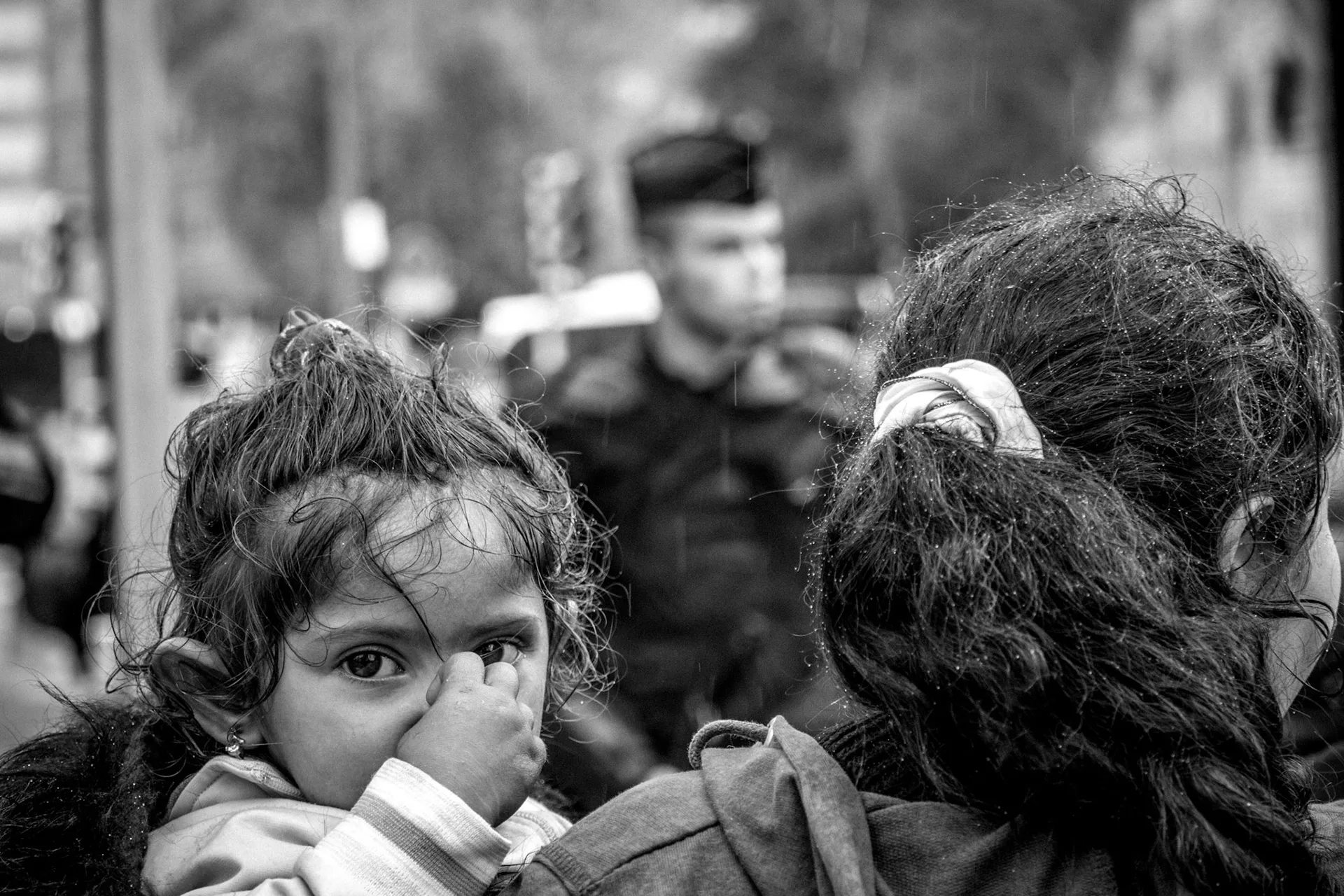
It was a difficult fight, facing very powerful forces, the full power of a state against us, using the forces of its law, its police, its capacity to spread racial hatred in society to legitimize its actions. And on top of that, it destroyed people’s homes, used police brutality against women and children, forcibly put people on charter flights, separating children from parents. It was heartbreaking, shameful, revolting. It was a bit like Trump in 2025, 15 years earlier.
“We were like the shepherd boy David facing the mighty giant Goliath. And we knew that the only resources we could count on were those we had and those the people around us had.”
We said it at the time. Faced with this authoritarian and pre-fascist state power, we were small. Although we sometimes won small victories on the ground, we most often felt powerless and exhausted. Even the condemnations of France by the European Commission and the UN had no effect on the reality. We were like the little shepherd David facing the mighty giant Goliath. And we knew that the only resources we could count on were those we had and those of the people around us: precisely those who needed, for their lives, the change we were trying to bring about together.
“That’s what the story of May 16th is about: the power we all need together is not outside of ourselves, it’s within our people.”
We had only one way out, and that was the path described by the master of radical political organizing, Dr. Martin Luther King Jr.: to transform the meager resources at our disposal into the weapons we needed to achieve the change we sought. In short: we needed to give suffering people the courage to take action. For—and this is what the story of May 16th is about—the power we all need together is not outside of ourselves; it is within our people. It is with them that we must create it, yesterday as now. It is in the hearts and hands of those who, like us, suffer from this reality that the power to transform it resides.
“The power of storytelling is the inherent power of speech, which is available to anyone who possesses a tongue, a head, and a heart.”
So we needed, and you still need, to find a way to give people the courage to take action; we needed to develop, through leadership, their agency, as they say in academia.
Now, among the leadership techniques used in radical political organizations to motivate people to act is the power of storytelling, which is the inherent power of words, a power available to anyone with a tongue, a mind, and a heart.
Listen to Martin Luther King’s speeches, listen to what makes your heart resonate, what makes you weep, not with sadness, but with the joy felt by someone about to commit themselves.
(La suite dans le prochain épisode....)