Story of the “moms’s collective” : episode 4/9 “Making the invisible visible”

Story of the “moms’s collective” : episode 4/9 “Making the invisible visible”

Battle story

The battlefield is the hearts of the people

By Pierre Chopinaud


(Previously…)

The target wouldn’t be all the mayors, nor the minister, it would be in the middle, at the right height: it would be the academy rector. There, the machine comes to life. The problem is that there is no Godzilla, there is no Joker, the person is in the presence of the speaker of Him, all of this is not fair to the person. Mirela, Alisa, Emmanuelle and Lucie printed a photo of him, investigated his career, guessed his values: they portrayed his character. That’s it, the casting was complete: the collective of mothers was going to be able to train for combat and go on the attack…

The first tactical challenge consisted of inventing a stratagem by which we would make the invisible visible: to constitute the proof

Alisa, Mirella, Lucile, and Emmanuelle were ready for the first major episode of the film, in which the mothers’ collective would be the heroines, for the implementation of their first tactic, the first battle, the first action. And just like actors who are about to play a scene or soldiers who are about to go into combat, they began, with my help, with training, rehearsals, and simulations.

The first tactic was to seek out evidence of discriminatory refusals of school enrollment. However, if public structures know how to discriminate methodically, they also know how to structurally make discrimination invisible. The first tactical challenge consisted of inventing a stratagem by which we would make the invisible visible: to constitute the proof. We therefore developed a protocol that consisted of everything that a mother-soldier-actress should say—and in what order—when she went to the town hall to register her child for school. Not only what she should do and say, but also what to have her interlocutor do and say. So we wrote a scene with dialogue that varied depending on the attitude of the municipal employee: each mother had to know her role by heart and above all: each mother had to start the recorder on her phone upon entering in order to capture the violation of the law of which the institution through its agents was guilty, but also the discriminatory, racist and insulting words which constitute, in the world as it is, the way in which society addresses these mothers and their children on a daily basis.

It was therefore a question of pushing one’s own vulnerability, one’s own weakness, to the extreme, to the point of caricature, in order to transform it into strength and, by this subterfuge, to push the adversary into error

Once the plan was established, they practiced in Askola’s small training vans, converted into training rooms, by role-playing: one played the mother, the other the municipal employee, until each had mastered their lines, their role, and the attitude to adopt depending on the opponent’s reactions, enough to confidently go into “battle”: the hunt for evidence. We knew that if the leading members, namely Mirela and Alisa, went into a duel against the municipal officials, we had a good chance of losing. Of course, they had more experience, self-confidence, and self-belief. But since they worked as school mediators on a daily basis, they were easily identified by the municipal officials. The latter would be wary and not be fooled by the plan. They all decided together that the new members would be the ones to go to the front. When a woman calls the Askola association to enroll her child in school, it’s an “anonymous” member of the mothers’ collective who accompanies her to register. But beneath her anonymity, she hides her mastery as an actress, a soldier, and an activist.

One of the instructions they received was to overplay not only this anonymity, but above all the stereotypical image that municipal agents have of mothers living in slums. They had to appear naive, vulnerable, exaggerate their difficulty understanding French and expressing themselves. In this way, the adversary would be confident, would experience their power and sense of domination to excess, and would unsuspectingly surrender to the usual humiliations and discrimination. It would therefore be a matter of pushing their own vulnerability, their own weakness, to the extreme, to the point of caricature, in order to transform it into strength and, through this subterfuge, to push the adversary into error, and obtain from them the weapons—the evidence—with which they would be defeated


“It was victory after victory, throughout the autumn: each time the offensive refusal was transformed into a weapon which was turned, not only against the municipal agent, but against all his superiors, up to the mayor of the city, who was ultimately the culprit”

And it was victory after victory throughout the fall: each time, the offensive refusal was transformed into a weapon that was used, not only against the municipal official, but against all his superiors, all the way up to the mayor, who was ultimately the culprit. Each time, the duel turned in favor of the mother, who obtained a speedy enrollment in school, thanks to the sword of Damocles that the collective held over the entire municipal service. Far from the front lines, “in the rear,” behind the keyboard of her computer or the micro-phone, Lucile played her part, issuing the threat: “We have proof of your violation of the law. You illegally refused to enroll a child in school for racist reasons. We will take this to court and notify the press if you don’t comply!”

The mothers, gathered together in an organized collective, had, from this first action, forged the sword which would make the Caesars of the department tremble, and which would soon, as we shall see, make even the office of the Minister of Education tremble.

But back to the present: if the sword of Damocles weren’t enough, the mothers’ collective carried out the threat, and Maîtres Ciuciu, Crusoe, and Stoffaneller, the allied lawyers, took action. The law was on the mothers’ side. The bad guys were losing every time. It was checkmate on all sides. Beyond these first duels won, these small victories that were strung together like pearls on the organization’s necklace of glory, each time it was just as much evidence that fell into the bag in preparation for the first major public action, the launch of the great drama in which the mothers would publicly ask the big bad rector to pay the price for the offense done to their children.

“the spectacle of pride and courage that replace fear and resignation in hearts. That is, the birth of shared faith that unites the offended into a single choir”

It was then that I began to receive, as an organizer, the greatest reward after all the effort: the spectacle of pride and courage replacing fear and resignation in hearts. That is, the birth of a shared faith that unites the offended in a single choir. I am not religious, but I know that this is the moment shared by Christians, for example, on Easter night when the light is shared among all, through candles, from flame to flame. Making the invisible visible isn’t just about capturing the evidence. It’s about seeing what makes women and men human come alive: the certainty that justice comes, not by chance, but through action. After years of experiencing humiliation, not only as a mother guilty of belonging to a despised group and who sees her child’s life degraded, humiliated, but also as a social worker who can’t change anything, despite the law, despite morality, despite everyone being taught since they were little that all children’s lives are equal… After years of sadness and resignation, fear was beginning to change sides. The last were replacing the first, justice was near.


How can you do this to the mayor, who is such a good person? The “this” in question was simply the power to enforce a Roma child’s right to school and to impose that his life has the same value as the lives of the children of the important lady who is crying. Fear had changed sides

I knew it with certainty, as one knows that spring is coming by seeing the flowers bloom, when Lucile, Emmanuelle, and Mirela told me about an appointment they had, after a mother’s bitter fight at the checkout with the mayor’s office of a large city in the department. Just a month ago, these “important” men and women were the ones throwing rocks at the mothers and children who were pacing, from the shantytown, the mountain that is, for them, the path to school. Now, the girls were sitting at the top facing them. They were looking them straight in the eyes because it was they who were now holding a rock—the court’s condemnation, the public shame—above their heads. That day, one of these important figures, faced with the intransigence of the leaders of the mothers’ collective who were demanding the immediate enrollment of a child in school, left the room crying with helplessness: “How can you do this to us? How can you do this to the mayor who is such a good person?” The “it” in question was simply the power to enforce the right to school of a Roma child and to impose that his life has the same value as the lives of the children of the important woman who was crying. Fear had changed sides.

(More in the next episode….)

The battlefield is people’s hearts – the story of the “moms’ collective” – ​​Episode 3/9: “the order of true justice“

The battlefield is people’s hearts – the story of the “moms’ collective” – ​​Episode 3/9: “the order of true justice“

Battle story

The battlefield is the hearts of the people

By Pierre Chopinaud


(Previously…)

After joy replaced fear in the hearts of these women, Alisa and Mirela asked them if they were ready to fight together for the lives of their children. They replied: “We are.” We had created the “Mom’ Collective.

“Faith is the intangible element that connects people to form a radical political organization.”

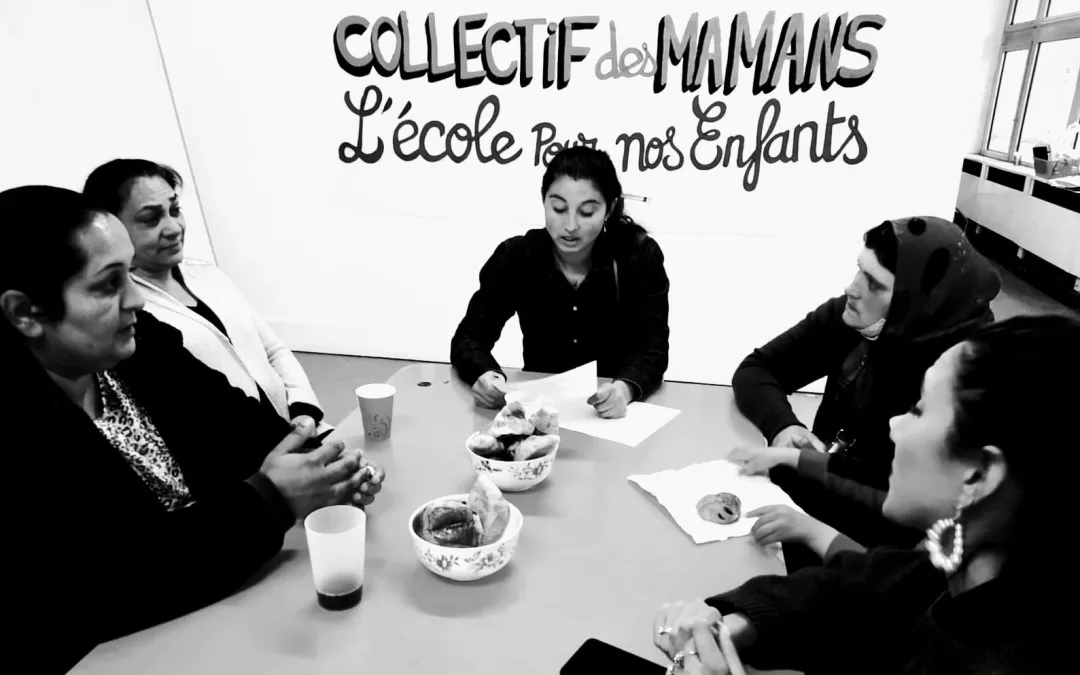
Mirela, Alisa, Lucile and Emmanuelle formed what we call a “leadership team”: it is the small, highly structured group of people who will be the locomotive of the train that sets off, who will lead and train the others. Each had their role: Mirela and Alisa used their newfound power to gather and encourage, through words, the other women to take action; Emmanuelle and Lucile contributed all the knowledge they already had mastered (writing, fundraising, etc.), and I, the organizer, helped them to think, design, implement, and evaluate each step of the battle plan and the plan for building the organization. We spent at least two hours together twice a month and each time it was two hours of joy. From the beginning, we felt that a great force was blowing at our backs: for some it was faith in God, for others the thirst for justice: we were right and we had faith in what we were going to accomplish.

Faith is the intangible element that connects people who come together to form a radical political organization. It is also the element that gives each person the courage to take the risk of taking action. Faith, that is, confidence: in oneself, in “us,” in what we are going to accomplish. It often falls to an “organizer” to be like a prime mover, the one who will ignite faith, give confidence (in themselves, in each other) to the members of the leadership team who in turn will give confidence to each member of the organization. This confidence is what Pastor Martin Luther King (who is to “radical political organizing” what Bruce Lee is to Kung Fu) called “love.” It is this “love” that indicates, according to him, the meaning of the action, and the high probability of its success: because the change it calls for is in the order of true justice.

“If we needed faith in justice, we did not have time to wait for the end of time.”

To return to the “Collective of Mothers,” and more specifically to the leading team; the task before Alisa, Mirela, Emmanuelle, and Lucile was to write their battle plan, to devise their strategy. It was a bit like writing the script for the adventure they were going to lead the members of the organization into. They had to imagine the successive scenes—that is, the tactics—following a movement that would build to a crescendo. They had to write the film in which the women of the collective would be the heroines. And above all, they had to find a name and face for the person who would play the role of the villain: it’s always the same drama that plays out in radical political organizing: for every David there must be a Goliath. Not because it’s a matter of imitating a fiction, but because at the heart of all the stories that have been told since the dawn of time, there is the drama of injustice, and the power relations, the struggle, through which its resolution passes.

The first question the members of the leadership team asked themselves in designing their strategy was: what change do we want? The change the mothers of the collective needed was immense, as vast as an ocean, so immense that to accomplish it, a revolution was needed… or the coming of the messiah. But if they needed faith in justice, their children didn’t have time to wait for the end of time. They needed to accomplish real change now. This immanence is a necessary condition for radical political organizing: we must transform reality here and now so that the coming together of people creates power through love. And conversely: power is needed to create radical change in reality.

“How can we escape despair when we see the gap between the world as it should be and the world as it actually is?”

They had already put faces to this ocean: the faces of their children. The change they needed was for the lives of their children to have the same value as the lives of the children of powerful people. But faced with this ocean, what could be done? How could they escape the feeling of helplessness that exhausts the “weak” and discourages them when they realize the gap between the ideal and the harsh reality that crushes them, between the world as it should be (the lives of all children are equal) and the world as it really is (the life of a poor child is worthless to the powerful)? To prevent Mirela, Alisa, Lucile, and Emmanuelle from drowning in the despair caused by the immensity of the ocean, they had to start by isolating a small inland sea: for them, this sea was school! And in this small sea: a small island that they were going to be able to conquer, because there is a shore that can be seen on the horizon and that can be reached by a navigable route. This small island is what is called in the “radical political organization” a strategic objective. And this small island in the small inland sea that was the school, it was the discriminatory refusals of school registration in the department of Seine-Saint-Denis.

Now that they had their little island in sight, the second question Alisa, Mirela, Lucile, and Emmanuelle asked themselves was: What is our path, our waterway? Where will we go to reach our goal? After hours of looking through the telescope, the path appeared: the collective of mothers would pay the powerful the cost of a refusal so high financially and politically that it would dissuade them from disrespecting the lives of their children in the future.

“It will be a matter of forging the weapons, the sword, with which the mothers will begin to make the powerful pay the price of their children’s dignity.”

This path is what we call a theory of change. It’s the great movement of the drama that will be experienced and played out during the campaign of actions.

Now it remained to imagine the scenes that would make this movement concrete, the tactics through which the strategy would be realized.

Thanks to the action of another collective created, developed and organized by Conatus, (the #EcolePourTous collective) discriminatory refusals of school registration had become illegal several months ago.  So, for this adventure, we had the law on our side.

The lead team decided that Alisa and Mirela would have to convince the other women in the collective to engage in a “testing” campaign. It would involve going to the counters of town halls that practice covert discrimination in school registration, to find the evidence that would allow them to be convicted. It would be a matter of forging the weapons, the sword, with which the mothers would begin to make the powerful pay the price for their children’s dignity. Not only would they demand that the justice system condemn the mayors to pay in money, but they would also expose their misdeeds as widely as possible to shame them. Who can publicly assume the methodical and intentional practice of preventing a poor, racialized child from accessing school? Stigmatization would now be the price to pay for those who fail to recognize in their actions the equal value of the lives of all children.

“Our Goliath had no face or name… He was neither Godzilla nor the Joker, no one had heard of him yet, so we had to make him a character.”

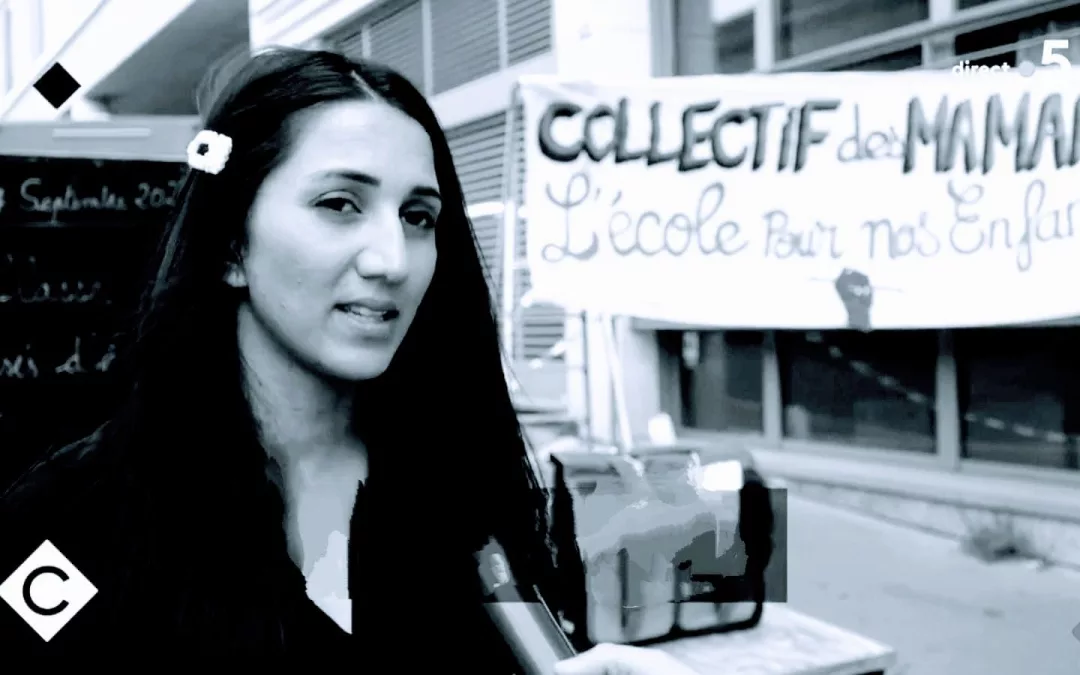
Since the tactics included legal and public actions, the leadership team needed to bring journalists and lawyers on board. It turns out that one of the spokespeople for the #EcolePourTous collective that had made school enrollment refusals illegal had since become a lawyer. She was Anina Ciuciu. And she herself had been a victim of this discrimination as a child. Alisa and Mirela couldn’t have found a better ally. She was one of them. She valued the dignity of these children as much as her own. In turn, Anina brought with her one of her colleagues, Anna Stoeffeneller, in whom she had great confidence, as well as Lionel Crusoé, who had recently convicted a mayor in a similar situation in Essonne. It was Lucile who was given the challenge of reporting the story to the general public and, above all, shedding light on the villains’ infamous misdeeds. They dreamed of a great battle, so the audience had to be strong: a major newspaper was needed, and their ally was a journalist from Mediapart, Faiza Zerouala. Lucile revealed elements of the plan to her. Her values ​​were consistent with theirs: the lives of all children are equal. Their victory would be hers. She was in the boat.

ela

Was everything ready for action? Everything? No! The villain of the story was missing. Our Goliath had neither a face nor a name. There were candidates for the role: most of the mayors of the 93. But if there are too many characters in a story, we no longer understand the drama. In a strategic campaign, there only needs to be one villain. It’s a target. It must be unique and fixed. If it is multiple and moving, you have a good chance of missing it. It was the needs of the legal proceedings that helped decide: the target would not be all the mayors, nor the minister, it would be in the middle, at the right height: it would be the head of the academy. There you go, the villain would be him. The problem was that it was neither Godzilla nor the Joker, no one had yet heard of him, so it would be necessary to make him a character. Mirela, Alisa, Emmanuelle, and Lucie printed a photo of him, investigated his career, and guessed his values: they had cast their own character. The casting was complete: the group of mothers was about to begin combat training and take on the challenge…

(More in the next episode….)

The battlefield is people’s hearts – the story of the “moms’ collective” – ​​Episode 1/9: “the lives we don’t cry about. »

The battlefield is people’s hearts – the story of the “moms’ collective” – ​​Episode 1/9: “the lives we don’t cry about. »

BAttle Story

The battlefield is the hearts of the people

By Pierre Chopinaud

The Askola association which helps parents who live in slums and squats in the 93 to enroll their children in school was facing insurmountable blockages from the mayors of the municipalities. Laws, morality, the rector, associations, nothing helps. Because it is not a question of rights but a situation of oppression, that is to say a relationship of power.

In France, in 2025, there are slums, and there are people who have the misfortune of living in them. A widely shared prejudice among activists and social workers is that the people who live there are resigned, apathetic, incapable of defending their dignity.

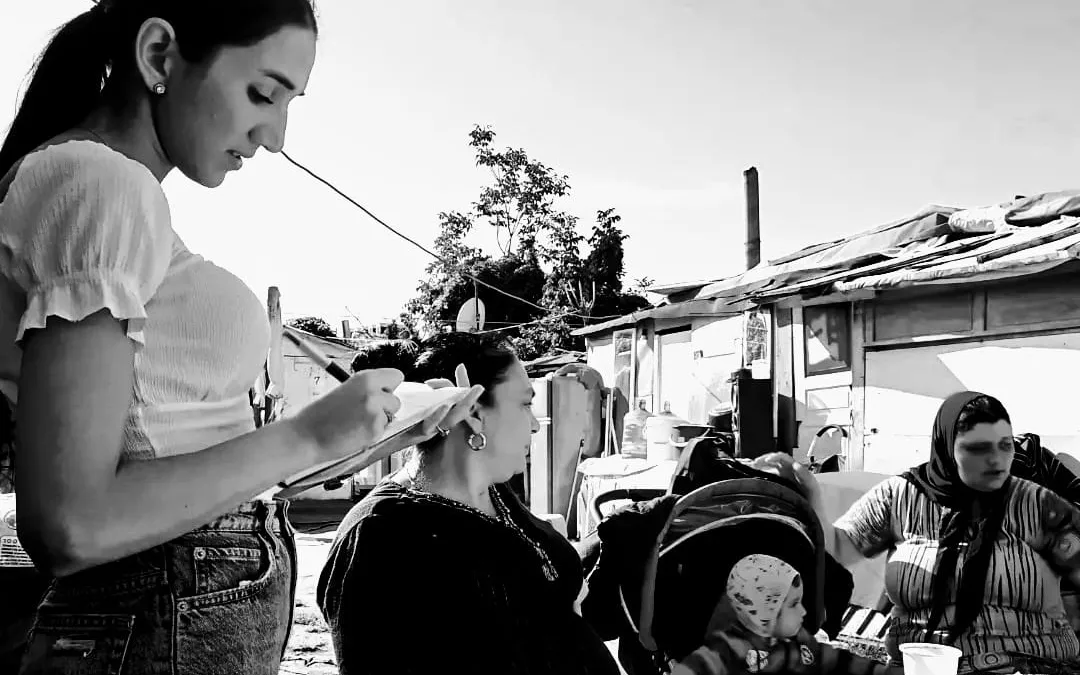
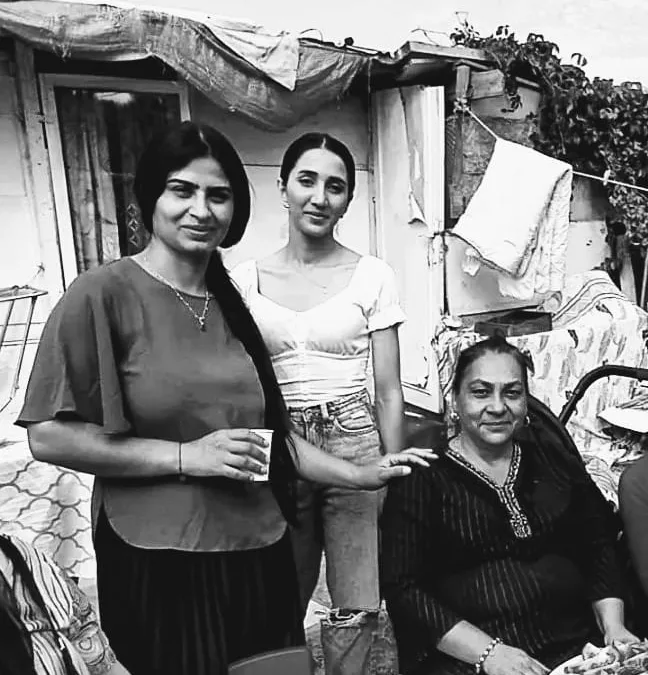
The Askola organization practices school mediation in Seine-Saint-Denis. Mirela, Lucile, Emmanuelle, Alisa and the others go to the slums to help parents enroll their children in school and help them feel good there.

What father, what mother has not been heartbroken by the suffering of their child whom they have just abandoned for the first time, at the start of the school year, in the middle of twenty-five little strangers and adults of whom they know nothing? So imagine that in the morning you woke him up in a wooden cabin, without water, after spending the night protecting him from rats, that you don’t know the language or any of the common customs and that in the evening it’s the police that you find with him at home who order you to go far away?  

“The path to school, for parents and children who live in a slum, is arduous and perilous.”

The path to school, for parents and children who live in a slum, is arduous and perilous. This is why Mirela, Lucile, Emmanuelle, Alisa and the others are there: they are a bit like the sherpas who help these parents and their children to climb the mountain that is their way to school.

But what if there was only the mountain to climb? The world would still be too beautiful! This is without counting on the powerful people who drop rocks on you from the summit to make the effort even more difficult. And among these people, up on the mountain, is the mayor of the city.

Many mayors of Seine-Saint-Denis prevent children from squats and slums from accessing their city’s schools. For what ? Because they want these slums to disappear; and welcoming these children into schools, into the school community, as the law and the principles of the republic oblige them, is to recognize that they exist, that they have dignity, rights, like all the others. Once you know the children who live there, it is more difficult to destroy their house. You know that you are not only destroying wood and cardboard but also the lives inside. Despite all possible cynicism, it can hurt the heart and the conscience. Especially when you are a socialist, a communist, a rebel, a Catholic, a Muslim, an “anti-racist”… It can be shameful.

“Refusing the child to school is to make him and his family invisible, it is to throw them in the garbage bag of lives that do not count, of deaths that we do not mourn.”  

Refusing the child to school is to make him and his family invisible, it is to throw them in the garbage bag of lives that do not count, of deaths that we do not mourn. It is to put oneself, as an elected official, at the service of the builder who wants to make money by building a large building in place of people’s small cabins, an Amazon warehouse, a cement factory, it is above all to place oneself in the most cynical way at the service of the intense racism of those who have a little more than nothing, whose parents or grandparents who arrived from Brittany, Algeria, Portugal, Mali, lived in their time in these same slums, in order to to flatter their baser feelings, and win the elections.

And believe me, there are no small profits in politics: whatever the color of the skin or the shirt, when the goal is to keep one’s position of power: all means are good: even racism. And when power is at stake, principles, values, laws generally remain on the sidelines.  

“the feeling of helplessness and indignation had swallowed up their rage and their anger.”

Mirela, Emmanuelle, Lucile, Alisa and the others were at the end of their rope : the feeling of helplessness and indignation had swallowed up their rage and anger: how can we live in such an immoral world? Nothing helped: the letters, the arrests, the appeals to the administration… Are we not in the country of human rights? How can a mayor who has the reputation of being an anti-racist activist so despise the lives of these children? This world is without faith or law…

One of the fundamental precepts of radical political organizing is as old as the dawn of time. He says: there is no justice without power. Jesus Christ would not have made any Caesar tremble if he had not come with the “sword” of God.

When the Askola team spoke to us about the situation of injustice which overwhelmed the parents and the children they accompanied on the way to school, we said: drop morality, drop administrative rules: together we will try to forge “the sword”, that is to say the strength and power that we need to restore dignity to these children…

(Continued in the next episode….)

Privacy Overview

This website uses cookies so that we can provide you with the best user experience possible. Cookie information is stored in your browser and performs functions such as recognising you when you return to our website and helping our team to understand which sections of the website you find most interesting and useful.